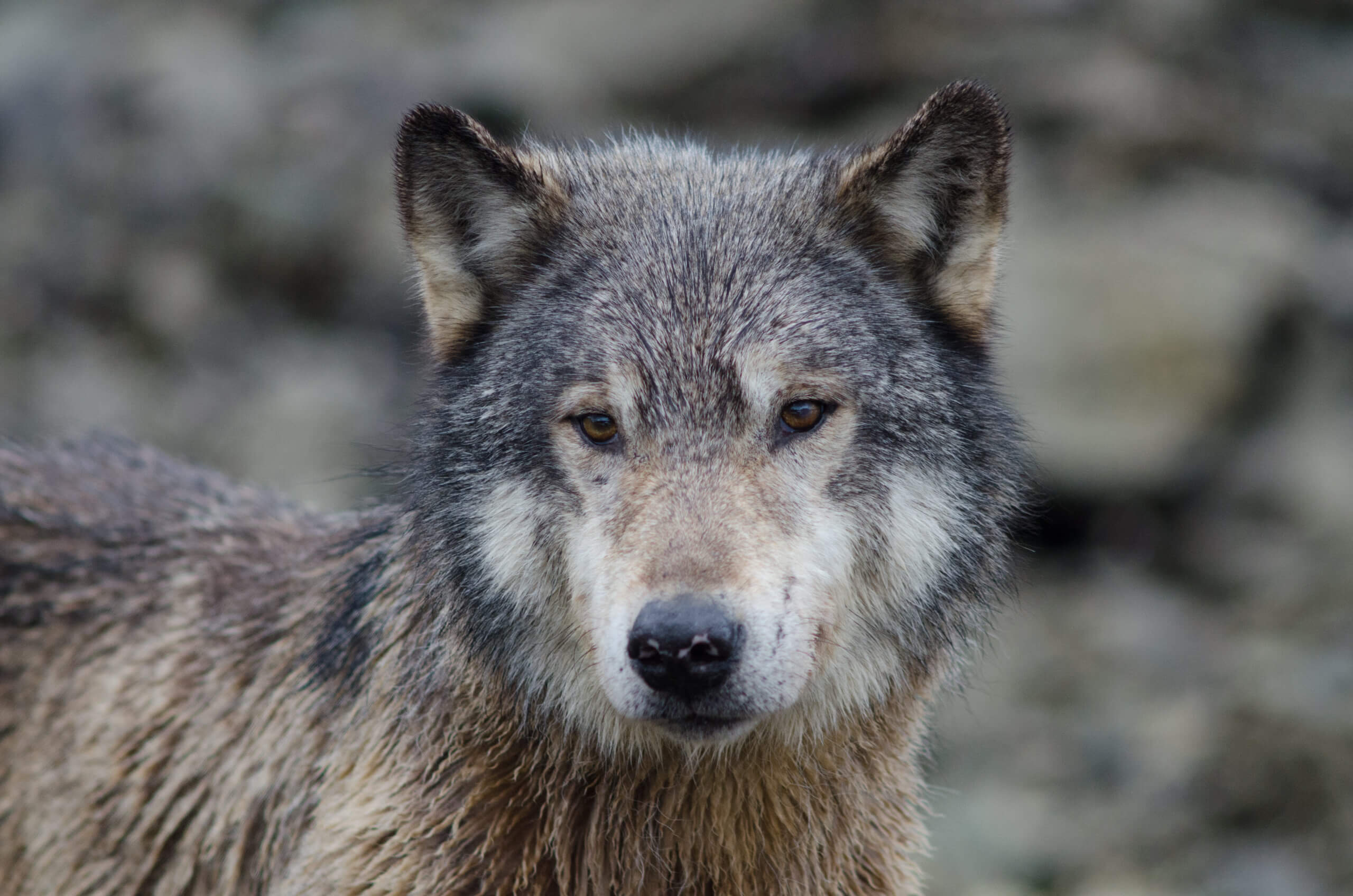
When Dr. Kyle Artelle and his team reviewed footage from a field camera and saw a wolf pulling crab traps out of the water with remarkable purpose and efficiency, they instantly recognized its significance. What they didn’t expect was that it would be picked up by a number of major outlets including The New York Times, The Washington Post, National Geographic, The Guardian, and Science.
We caught up with Kyle to hear how this moment unfolded. What became clear was that while the footage itself might have been serendipity, everything that followed was the result of preparation, a clear sense of purpose, and deep relationships built over years of collaboration — especially with Indigenous stewards whose leadership made the discovery possible in the first place.
Identifying a Compelling Story and Seizing the Moment
Kyle, a conservation ecologist at the State University of New York College of Environmental Science and Forestry, collaborates closely with the Heiltsuk Integrated Resource Management Department (HIRMD) on various social-ecological restoration projects, from invasive green crab management to long-term wolf stewardship efforts.
Last year, a mystery kept cropping up: the team’s crab traps were repeatedly found damaged. To get to the bottom of it, they grabbed a couple of spare field cameras from another project and pointed them at a trap. Because the traps sat in deep water and were never exposed at low tide, they expected to catch a curious seal at most.
Later, when the footage of a wolf pulling the trap appeared, the team instantly recognized the significance of the finding, as well as the likely broad interest there might be in it.
“We thought this had a good chance of getting attention,” Kyle told us. “I remember reading in Nancy Baron’s book, Escape from the Ivory Tower, about the type of stories that get attention, including ones that evoke awe. And in interviews after this came out some journalists told me directly, ‘We want something exciting right now. Something we can smile at.’ This had that.”
Still, the video alone wasn’t enough. What really turned this moment into a wide-spread news story was what Kyle and his team did next.
They crafted a compelling press kit, complete with visuals, quotes from partners, and clear takeaways from their research; They prepared accompanying materials that showcased the broader context of the project, including a website and longer-form video; They created an intentional outreach list of journalists, both familiar and new, and sent carefully crafted email pitches.
While the wolf video may have spoken for itself, everything that followed required honing communication skills: distilling complex research into clear messages, identifying key audiences, and building relationships with journalists — all while staying grounded in their mission.
That preparation paid off. Nearly every major outlet they contacted responded to their press release, and the coverage was overwhelmingly positive and accurate.
“If I had anything to do with the effective reporting on this I think it was directly because of COMPASS and the communication work I’ve done with others in this realm that taught me how to speak a little more clearly,” Kyle shared.
A long-time science journalist and COMPASS friend sent our team the story featured in their journal with a note that made us smile: “An example of a COMPASS alum making all the right moves.”
Centering the Larger Story — Knowing Your “Why”
The video coverage opened the door to larger conversations around wolf behavior, coexistence, and Indigenous stewardship.
Kyle explained that in many regions, wolves face intense pressures from hunting, livestock conflicts, and predator-control programs. But in Haíɫzaqv (Heiltsuk) Territory, wolves live differently.
“This video spotlighted a place where wolves are not only surviving, but thriving,” he shared. “We’re wondering if this behavior arises because wolves aren’t persecuted here. It might be that they’re not having to be nervous about people all the time, so they can actually experiment. Yet wolves here also live side-by-side with people and have for thousands of years – it’s a really important example of coexistence.”
The video became an opportunity to challenge assumptions and spark curiosity about wolves.
“We hoped people would think: ‘Maybe there’s more about wolves we ought to learn. Maybe we need to rethink our approach.’ If we stop viewing them only through the lens of population numbers and start thinking of them as creative individuals, it changes the conversation. And when you begin asking how our actions affect them, both behaviorally and culturally, it becomes harder not to give them deeper consideration. This video might be just a glimpse of what we hope people will learn from this place.”
This moment also created an opportunity to highlight something special about this project: this discovery couldn’t, and wouldn’t, have happened without Indigenous stewardship.
The Relationships That Make the Work Possible
A central theme in Kyle’s story is how partnerships have shaped his work — both his research and communication.
Throughout our conversation, Kyle emphasized the importance of the Haíɫzaqv Nation’s leadership. Guardians are out monitoring traps, collecting data, and conducting research, while HIRMD is guiding that research and setting stewardship priorities throughout the territory. The project exists because of that leadership.
“This new insight into wolves is a direct result of Haíɫzaqv-led governance and stewardship.” he said. “It’s not a coincidence it happened here.”
He also spoke warmly about the enduring connections within the COMPASS community. When asked whether he still keeps in touch with his 2015 Wilburforce Leader in Conservation cohort, he didn’t hesitate. “Absolutely,” he said, naming a number of people from his cohort and other programs who have influenced and supported him — including his partnership with Dr. Robert Long of the Woodland Park Zoo, who collaborates on the wolf project. “We use scent dispensers from the zoo at several sites. And we’ve been plotting quite a few projects together.”
These relationships, Kyle shared, have opened new paths in applied conservation science and they provide a personal support system that helps him stay energized. From supportive email threads to creative collaborations, those connections matter.
Building on the Momentum
Behind the viral footage of the wolf was years of relationship-building, thoughtful collaboration with Indigenous Nations (especially the Haíɫzaqv Nation at the center of this work), intentional communication training, and a shared passion for socio-ecological conservation.
What we love most about Kyle’s experience is how beautifully it illustrates something we see again and again in science communication:
When preparation meets opportunity, and when researchers stay grounded in their purpose and relationships, it moves the conversation forward and inspires deeper, more thoughtful engagement with the work.
And this is just the beginning for Kyle and his team. As they state on their website: “We recognize that we have likely only scratched the surface in terms of understanding this incredibly complex species relative, and take an approach of keeping an open mind towards the learning opportunities that will present themselves as we continue to move forward.”
Learn more about Haíɫzaqv Wolf and Biodiversity Project here: https://placeofwolves.ca/